Bringing clarity to priorities, decisions, dependencies and ownership so complex work can move forward.
- Priorities
- Decisions
- Dependencies
- Ownership
- Action
Programs • Transformation • Operations • Strategic Communications

Where Strategy Meets Execution
Organizations can know exactly where they want to go and still struggle to get there.
Execution has to move across people, processes, decisions, systems and competing priorities.
How do you turn a business priority into coordinated action?
The Work
My work sits between a business priority and everything required to make it real: people, processes, decisions, systems and competing demands.
Across programs, transformation, operations and communications, I focus on creating the clarity and structure that help organizations move.
Bringing clarity to priorities, decisions, dependencies and ownership so complex work can move forward.
Examining how work moves, where friction develops and what needs to change for execution to become clearer, simpler and more effective.
Helping leaders give complex priorities meaning, create alignment and make clear what matters, what is changing and what comes next.
Different disciplines. One underlying question.
How do we make it easier for an organization to move from intention to execution?
Ideas

There is usually a moment when strategy feels incredibly clear. The priorities have been debated, decisions have been made and everyone in the room understands where the organization is going.
Then that strategy has to travel.
It moves through leaders, teams, processes and hundreds of smaller decisions. With every handoff comes interpretation. That space between deciding and doing is where strategy often starts to lose its shape.
Every organization has workarounds people barely notice anymore. The extra spreadsheet. The approval everyone knows takes forever. The meeting before the meeting. The person you call when you need something to actually move.
I find those workarounds fascinating because they usually developed for a reason. Friction can tell you where the organization has quietly learned to compensate for itself.
There are moments when someone asks, “Can we make this clearer?” and the answer sits somewhere deeper than the wording.
Good communication can simplify complexity and help people understand what matters. The strongest communication starts even earlier, with leaders who are clear on the decision, the trade-offs and what they are asking people to do.
More Writing
Signature Work
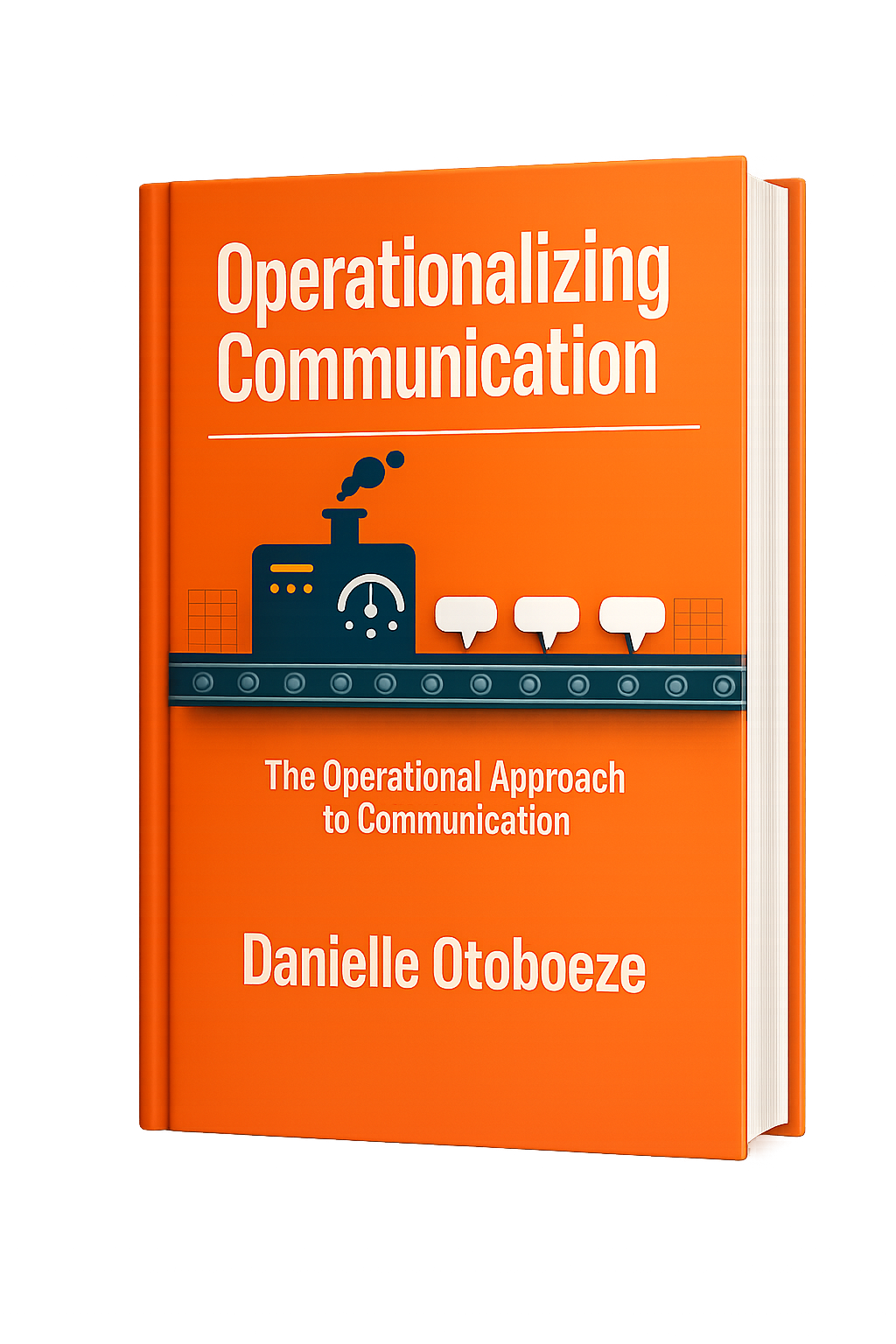
Communication is not simply something organizations do. It is part of how organizations operate.
Operationalizing Communication explores what changes when communication is treated as organizational infrastructure rather than a series of messages.
It introduces the Communication Operating System, a practical approach to how information, meaning and alignment move through an organization.
Connect
I welcome conversations around leadership, transformation, strategic communications, speaking and thoughtful collaborations.